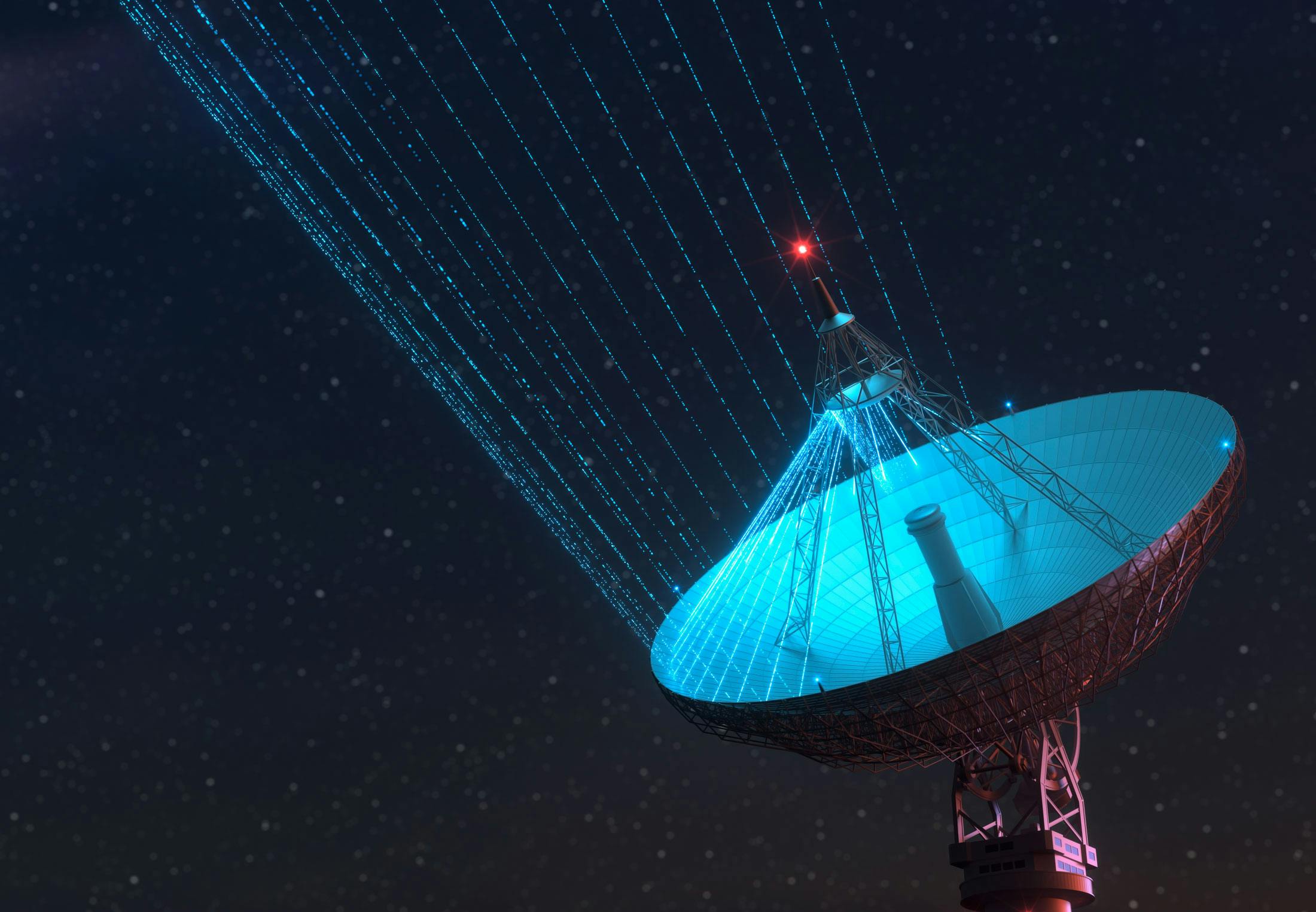
Astronomers are challenged by mysterious radio signals from space, known as Fast Radio Bursts (FRBs), which continue to raise questions.
Radio signals from the depths of the universe remain a source of fascination for scientists. These unusual bursts, often referred to as Fast Radio Bursts (FRBs), are lightning-fast and powerful waves of radio emission detected by telescopes on our planet. Despite extensive research, their precise origin remains elusive, sparking lively debates within the scientific community.
What Are Fast Radio Bursts?
Fast Radio Bursts are extremely short, high-energy radio pulses that typically last only milliseconds. Since their discovery in 2007, they have captured the attention of astronomers worldwide. Despite extensive studies, many aspects of these phenomena remain both intriguing and puzzling.
There are several theories about how FRBs are formed, including possible links to cosmic events such as supernovae or the merging of neutron stars. But without conclusive evidence, their exact origin remains a mystery. “It could open the door to an entirely new field within astronomy,” says a scientist involved in the Square Kilometre Array project.
New Discoveries and Instrumentation
Through the use of advanced technologies such as the CHIME radio telescope in Canada, the number of observed FRBs has increased dramatically. These developments allow astronomers to conduct deeper analyses and potentially uncover patterns within the signals.
Modern techniques, such as machine learning and advanced data analysis, contribute to new breakthroughs. This enables researchers to identify FRBs more efficiently, which may further unravel the mysteries of their origins. “We are in the midst of a golden age of radio astronomy,” notes a leading astrophysicist.
The Impact of FRBs on Science
Research into FRBs has significantly enriched our understanding of the universe, particularly regarding intergalactic space. By studying how radio waves propagate, scientists can gather valuable data about the density and structure of matter between galaxies.
These signals may even reshape our understanding of fundamental physics. Some theories suggest they could provide clues about unknown forms of matter or natural phenomena. “This could mark an exceptional new chapter in astronomy,” a specialist remarks.
Speculation and Controversies
Despite the scientific focus, there is speculation that FRBs might be signals from extraterrestrial civilizations. However, these ideas are approached with caution and skepticism within scientific circles.
There is little to no evidence that these bursts are generated by intelligent life forms. The majority of astronomers emphasize that there are plenty of natural processes capable of producing such powerful signals.
The Future of FRB Research
The coming years promise many new revelations about FRBs, especially with ambitious projects such as the expansion of the Square Kilometre Array in both Australia and South Africa. These facilities will allow astronomers to study FRBs with unprecedented detail and precision.
With continued collaboration and investment in advanced technology, scientists hope to gradually unravel the mysteries of the universe. The search for insights goes on, with a positive outlook on future discoveries that FRBs may bring.